一. When Space Becomes a Luxury: The Modern Dilemma of Small Apartments
In today's city life where every inch is precious, small apartments have become the reality for most people. Statistics show that in China's first-tier cities, apartments under 90 square meters account for over 65% of the market. However, a sense of spatial confinement has become a common struggle—traditional doors cut the visual flow, hallways waste valuable area, and clearly defined functional zones make an already compact home feel even more cramped. A protruding bedroom door on a wall is often the very culprit that ruins the overall sense of space.
This is precisely the core pain point that Landbond Corten's Invisible Door System aims to solve. It's not just a door; it's a revolutionary way of thinking about space—by eliminating visual boundaries, it restructures the spatial logic of small apartments, allowing every square meter to breathe.
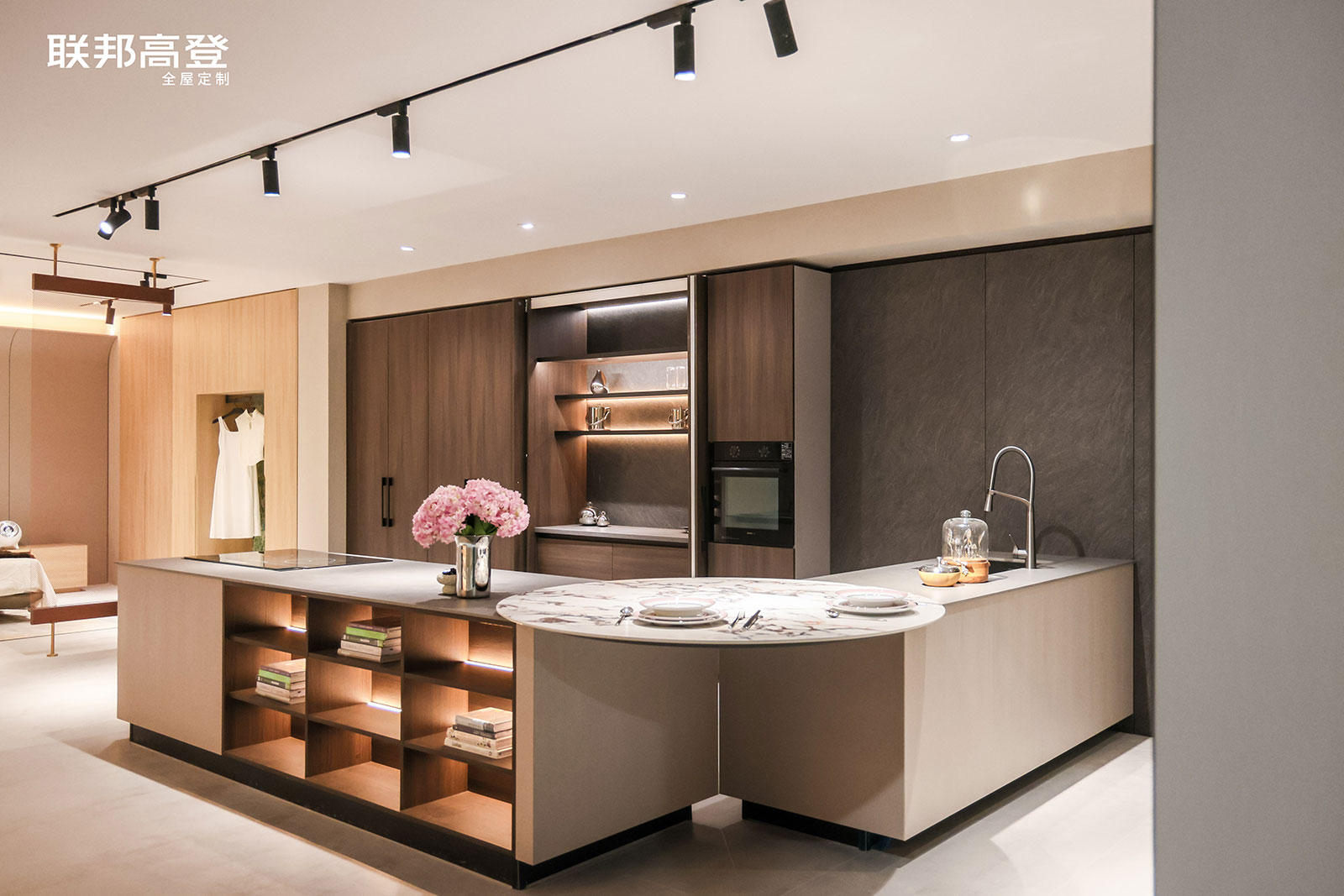
二. The "Disappearing Magic" of Invisible Doors: How to Expand Space by 30%?
Three Principles for Visual Expansion
1. Eliminating Visual Interruption Principle
The frames and color differences of traditional doors create "visual pause points" in our brains, subconsciously dividing the space into smaller sections. Landbond Corten's Invisible Doors feature a surface material that perfectly matches the wall, achieving a seamless transition from wall to door. When the door blends into the wall, visual fluidity improves, and the brain naturally perceives it as "one cohesive space."
2. Enhancing Light Flow Technique
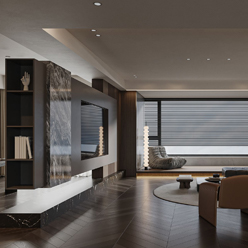
Without door frame shadows and thickness variations, natural and artificial light can diffuse unobstructed throughout the space. Especially when paired with Landbond Corten's Wall System, the living room's daytime illumination is noticeably enhanced with invisible door designs, transforming brightness directly into a sense of spaciousness.
3. Reconstructing Traffic Flow Optimization
In traditional layouts, door positions dictate the necessity of hallways. However, the Invisible Door System allows designers to reposition doors, even incorporating non-traditional opening methods like pivoting or sliding. This means that space originally designated for "traffic areas" can be reclaimed for functional use, achieving true "zero hallway waste."
三. When Industrial Meets Minimalist Aesthetics
The Design Philosophy Behind the Material Story
Its color subtly changes over time, injecting warmth and narrative into minimalist spaces. Landbond Corten innovatively brings this material, often used for exterior facades, indoors, creating a striking contrast:
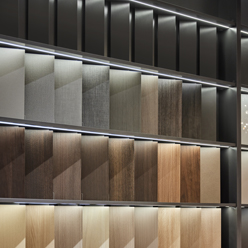
• Texture Layering: The texture produces delicate variations under light and shadow, offering more visual depth than flat walls.
• Color Integration: The unique shade perfectly blends into modern, industrial, wabi-sabi, and various other styles.
• Durability Features: One-time installation with high-quality after-sales maintenance.
"The Visible Art in Invisibility"
Interestingly, when an invisible door is closed, it blends perfectly into the wall system. When opened, the exposed door edge becomes a meticulously designed visual focal point. This contrast between "hidden" and "revealed" adds intriguing details to minimalist spaces.
四. Professional Installation: The Technical Core of Invisible Doors That Aren't "Invisible"
When choosing invisible doors, consumers are often most concerned about long-term usability. Landbond Corten's systematic solutions ensure the durability of "invisibility":
Four Core Technical Guarantees
1. Frame Structure
2. Hidden System
3. Wall-Integrated Craftsmanship
4. Intelligent Leveling Technology
五. Beyond the Living Room: Creating "Flowing Spaces" with a Whole-House Invisible System
Landbond Corten's philosophy extends beyond the living room. When multiple spaces adopt a unified invisible door system, it creates a multiplier effect:
Example of a Whole-House Invisible Solution for Small Apartments
• Living Room Invisible Door → Bedroom
• Bedroom Invisible Door → Wardrobe
• Wardrobe Invisible Door → Bathroom
This "spatial nesting" design sparks a sense of exploration for visitors while significantly improving space utilization. Paired with lighting, different scene modes can be set, bringing the space to life.
六. Cost vs. Value: A Single Investment with Multiple Returns
A Rational Look at Input and Output
Initial Investment: The invisible door system is more expensive than traditional doors. However, considering it simultaneously addresses three needs—wall decoration, spatial optimization, and aesthetic enhancement—it offers higher comprehensive value.
Long-Term Value:
1. Property Value Appreciation: Quality design has become a significant premium factor in secondary housing transactions.
2. Maintenance Costs: Nearly zero maintenance required.
3. Quality of Life: The psychological value of living in a thoughtfully designed space daily is immeasurable.
Recommended for:
• Minimalist style enthusiasts
• Owners of small apartments (<90㎡)
• Urban professionals pursuing a quality lifestyle
• Investors with future resale plans looking to increase property value
七. The Future Is Here: The Intelligent Evolution of Invisible Door Systems
Landbond Corten's Invisible Door System will bring more possibilities:
• Gesture Sensing
• Scene Linkage
• Security Integration
These innovations will extend "invisibility" beyond the visual realm into seamless interaction, truly realizing technology serving the living experience.
Conclusion: Redefining the Possibilities of Small Apartments
In an era where small apartments are becoming mainstream, Landbond Corten's Invisible Door System offers not just a product but a mindset for spatial liberation. It challenges the traditional notion that "doors must be visible separators," using minimalist design language and precise technical execution to prove that small spaces can also possess an open, airy feel and refined details.
When the living room walls extend seamlessly, when light flows freely, and when every corner of the home is meticulously designed yet unobtrusive, you'll realize: the boundaries of space lie not in physical dimensions but in design imagination. Choosing invisible doors means opting for a smarter, more elegant way of life—creating infinity within limits, which is the true wisdom of modern urban living.
Implementation Suggestion: If you're considering a small apartment renovation, why not start with one wall? Contact a Landbond Corten professional designer for a free spatial assessment and obtain a customized "Invisible Expansion Plan" to take the first step toward creating your "borderless" home.
Landbond Corten—Redefining Spatial Boundaries, Letting Every Square Meter Breathe.